
Blood pressure
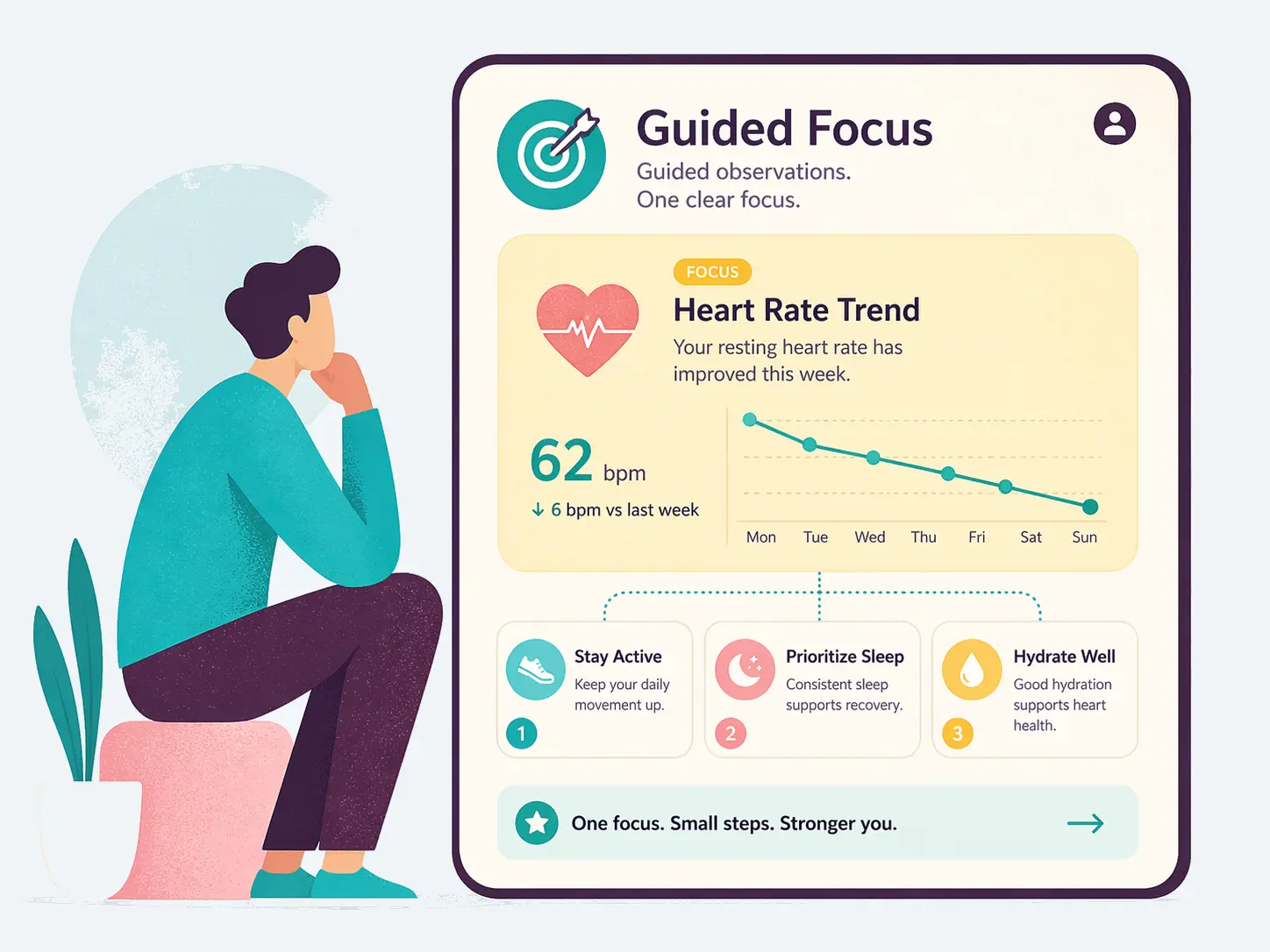
The guided focus can center on recent trend, stability, logging frequency, or visible change across the week.
Guided AI over your recent tracked data
Get short health observations from the data you have already tracked in VitalTracking.
The current experience works from a recent natural 7-day window and focuses on real app domains: blood pressure, glucose, sleep, mood, and medication follow-up.

Built to help you read trends, steadiness, or consistency without presenting the result as medical diagnosis.
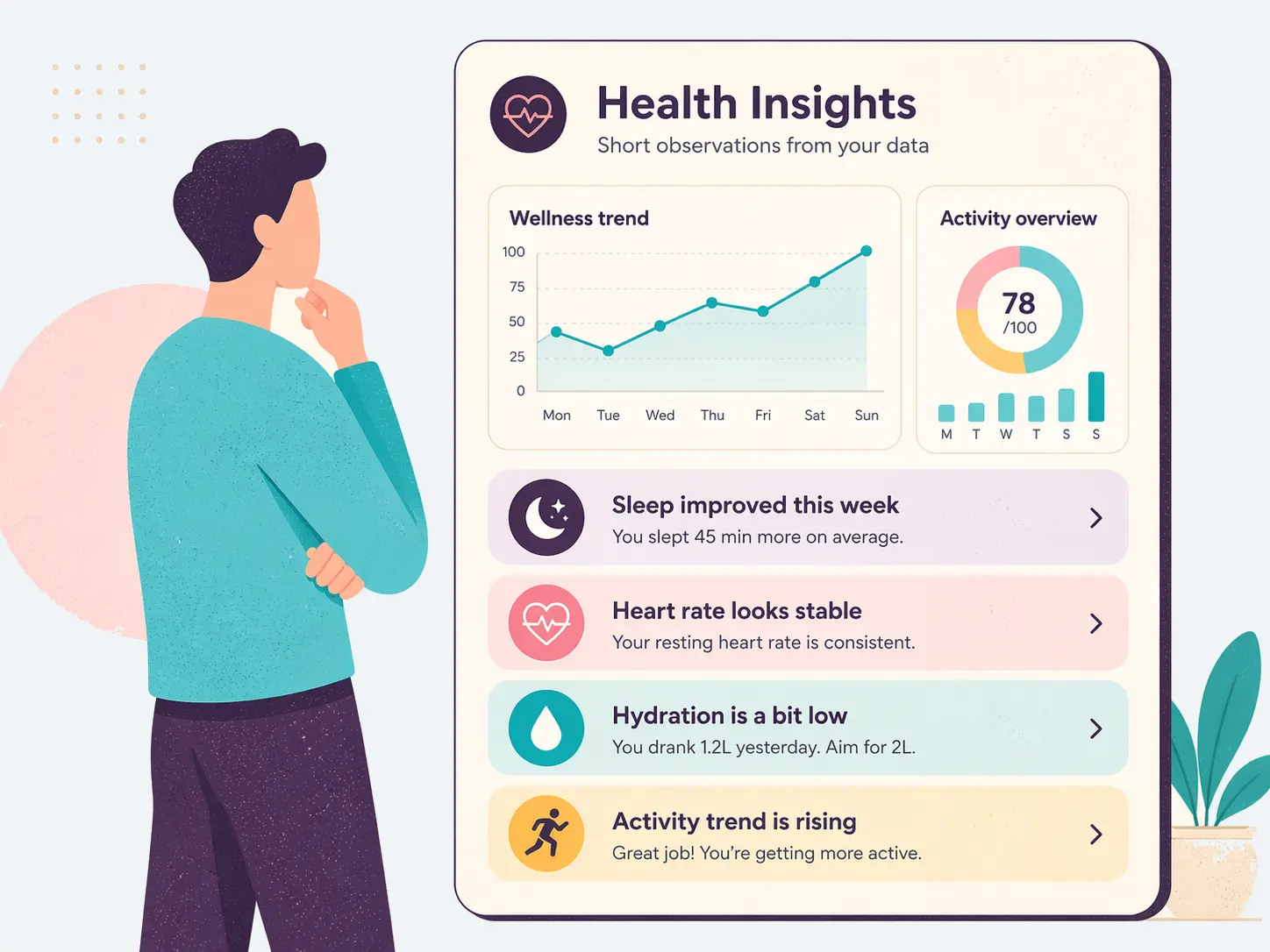
What kind of insights you can get
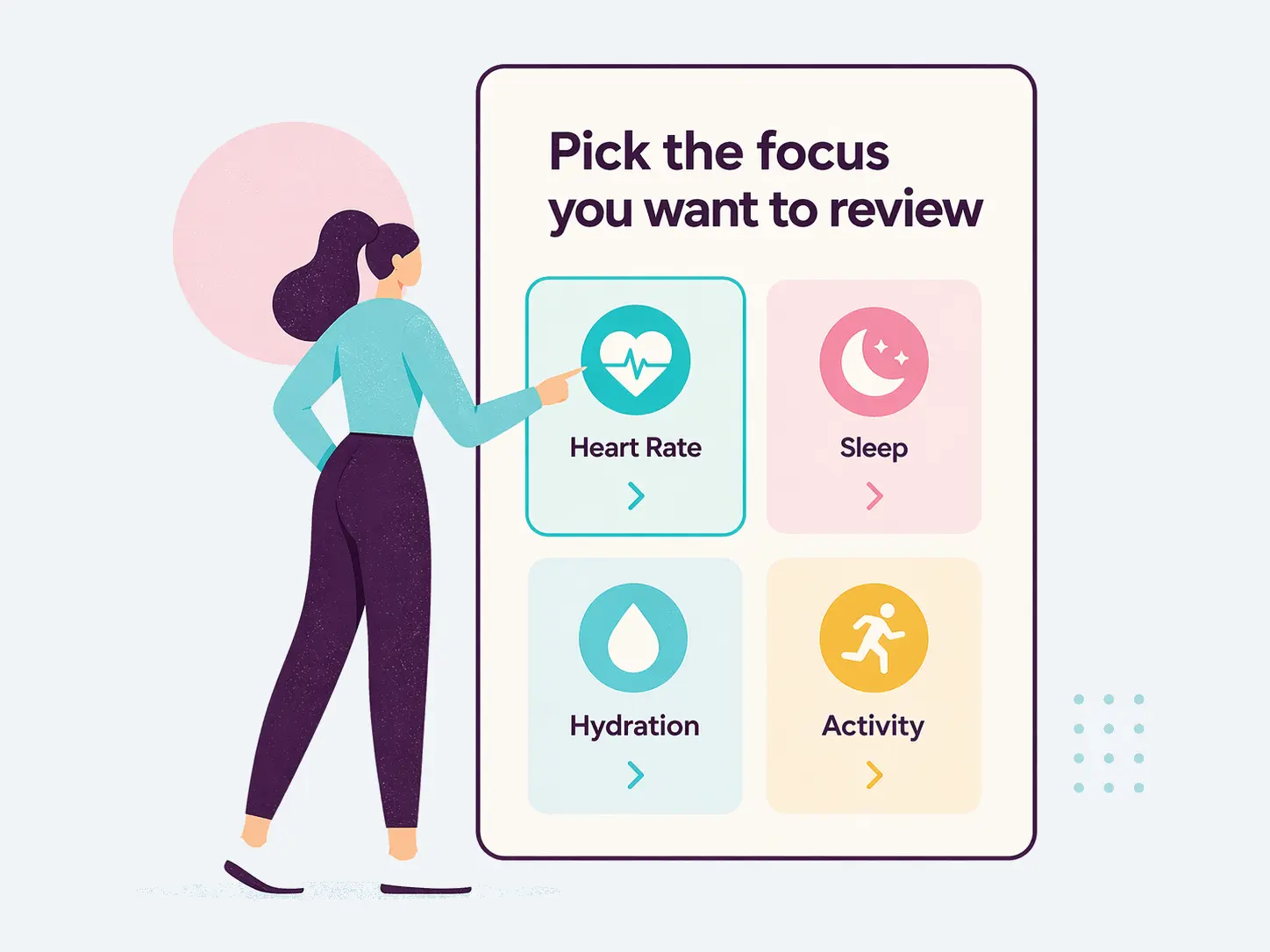
The AI does not generate an open clinical summary. In the app, you first choose a domain and then a guided focus so the response stays brief, narrow, and anchored to the recent data available.
The guided focus can center on recent trend, stability, logging frequency, or visible change across the week.
It can help you review recent trend, stability, logging frequency, or visible changes across the last few days.
These domains can focus on regularity, duration, day-to-day variation, recent changes, or steadiness depending on what you select.
It can read consistency, irregularities, recent pattern, and weekly follow-up from active medication plus recent dose tracking.
How the analysis works
The current implementation is designed as a guided reading: AI starts from your recent tracked records, uses one selected focus, and returns a short observation with a clear note that it does not replace professional review.
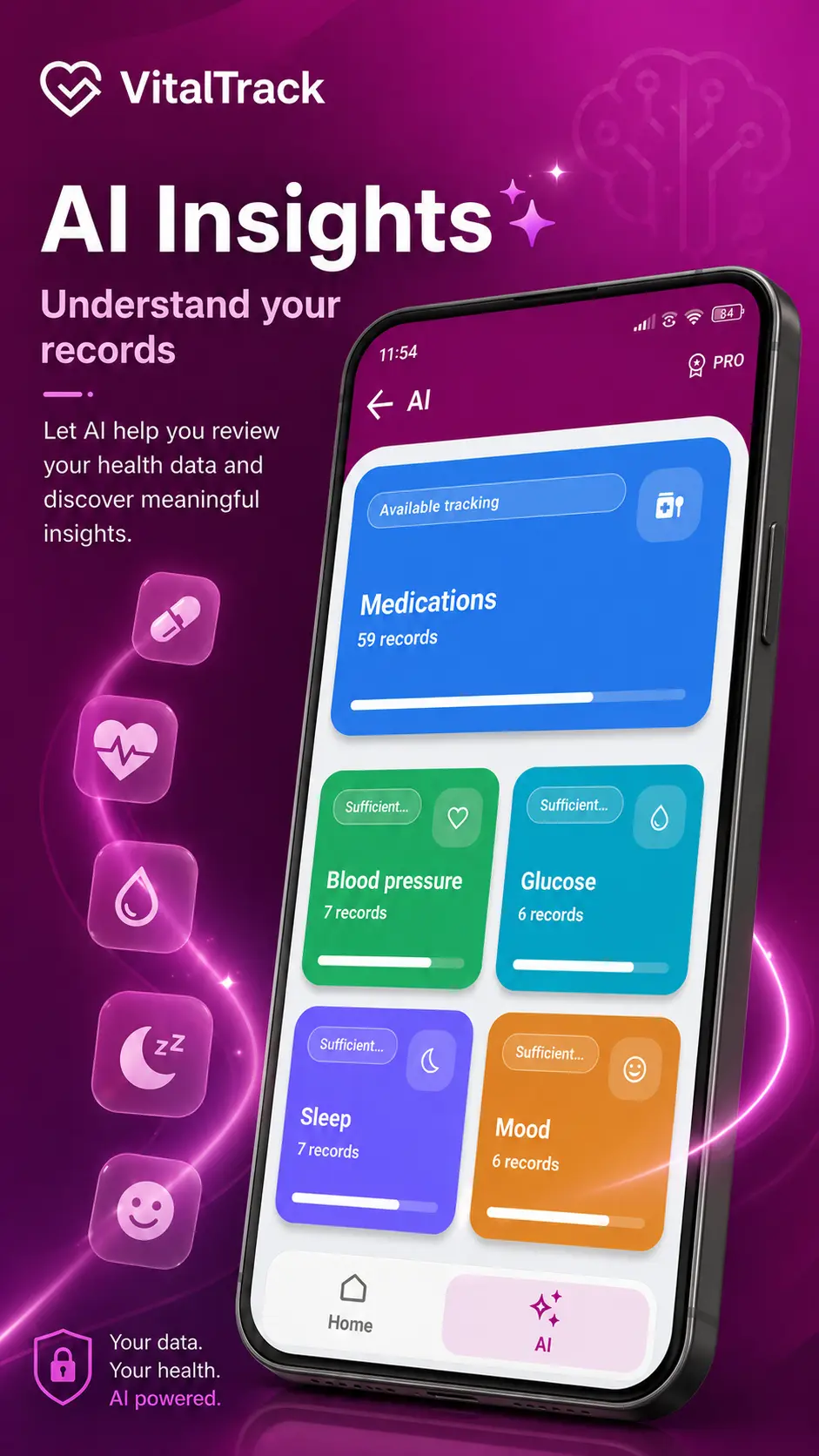
Only domains with enough recent base or active follow-up can be selected, following the app’s real rules.
Each domain offers guided focuses such as recent trend, stability, regularity, or consistency, depending on the domain.
The reading is built from valid recent records and structured snapshots from the last 7 days.
The reply is intentionally brief, concrete, and tied to the focus you selected.
The output itself makes clear that it is a guided reading and does not replace professional judgment.
Data requirements and unlock rules
The app checks whether valid data exists before enabling each domain. Not every analysis is always available: it depends on what you have tracked recently.
Blood pressure, glucose, sleep, and mood each need at least 3 valid records inside the recent window before that domain becomes available.
The adherence domain requires at least one active medication, plus recent dose tracking, before a useful reading can be generated.
The current AI experience includes trial access control, daily and total usage limits, and a credits layer inside the AI flow.
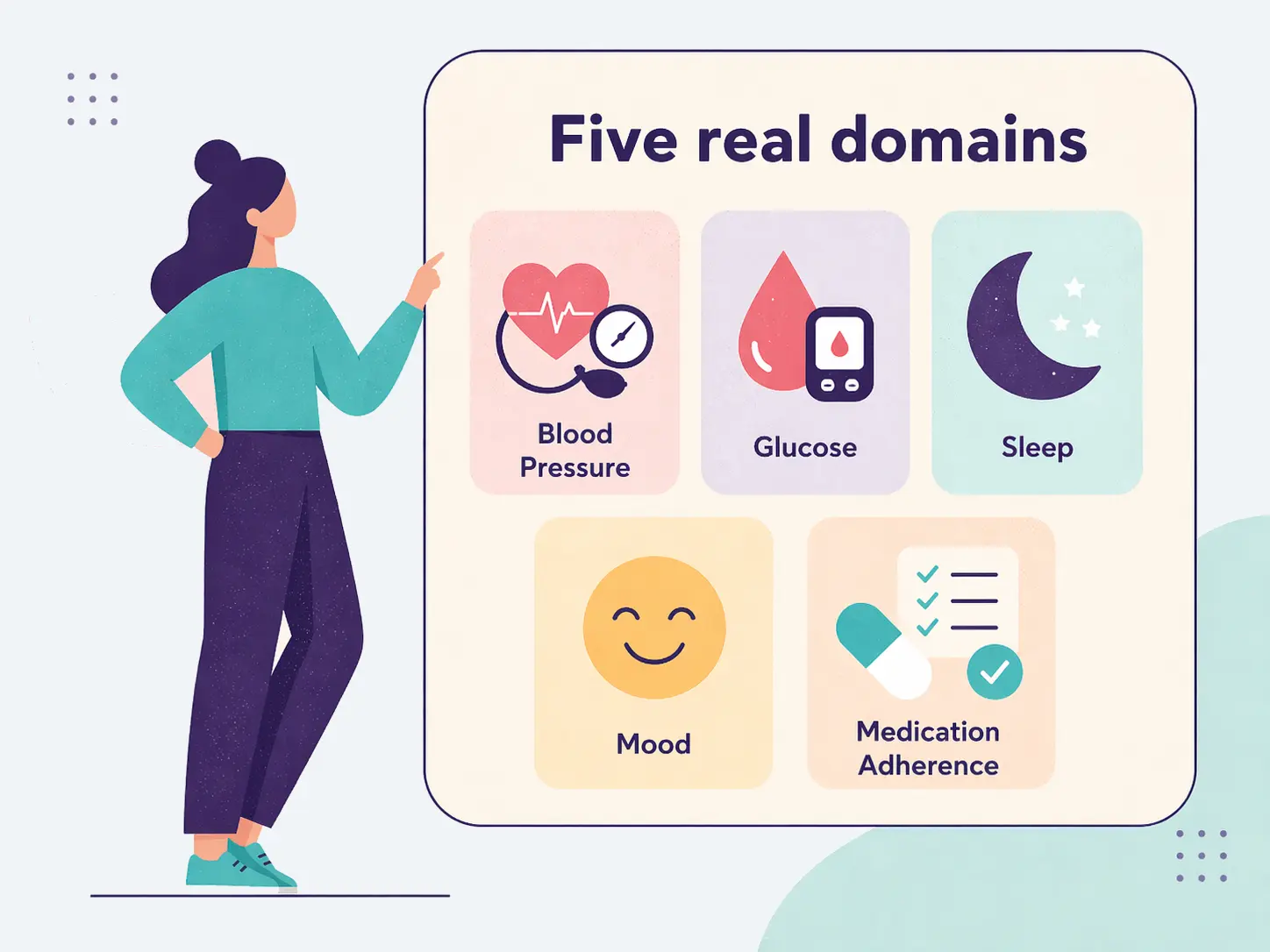
Domains covered
This landing only describes domains that are actually present in the current AI implementation and the connected data layers inside VitalTracking.
Reviews recent systolic and diastolic records to surface trend, steadiness, or visible weekly change.
Uses recent glucose records to help you read logging rhythm, steadiness, or short-term direction.
Works from logged sleep hours to review regularity, duration, variation between days, or recent change.
Builds on saved mood scores to return a short reading about steadiness, variation, and recent continuity.
Uses active medication and recent dose logs to read consistency, irregularities, or weekly follow-up in adherence.
In every case, AI works from data already tracked by the user. When there is not enough recent data, that domain stays locked until a real base exists.
BLOG
Practical reading and context to support daily health follow-up, readings, and medication.
Related features
These features provide the records and follow-up context AI needs to return a useful reading.
Record blood pressure, glucose, sleep, and mood so AI has real tracked data to work from.
View featureKeep treatments, reminders, and dose follow-up visible before reading adherence patterns.
View featureAdd medical visits to the broader context when you need a clearer follow-up routine.
Open VitalTracking and use AI as a secondary layer to read trends, steadiness, or consistency in your recent data, always as follow-up support and never as medical diagnosis.
This guided reading is based on recent tracked data and does not replace medical or professional review.